
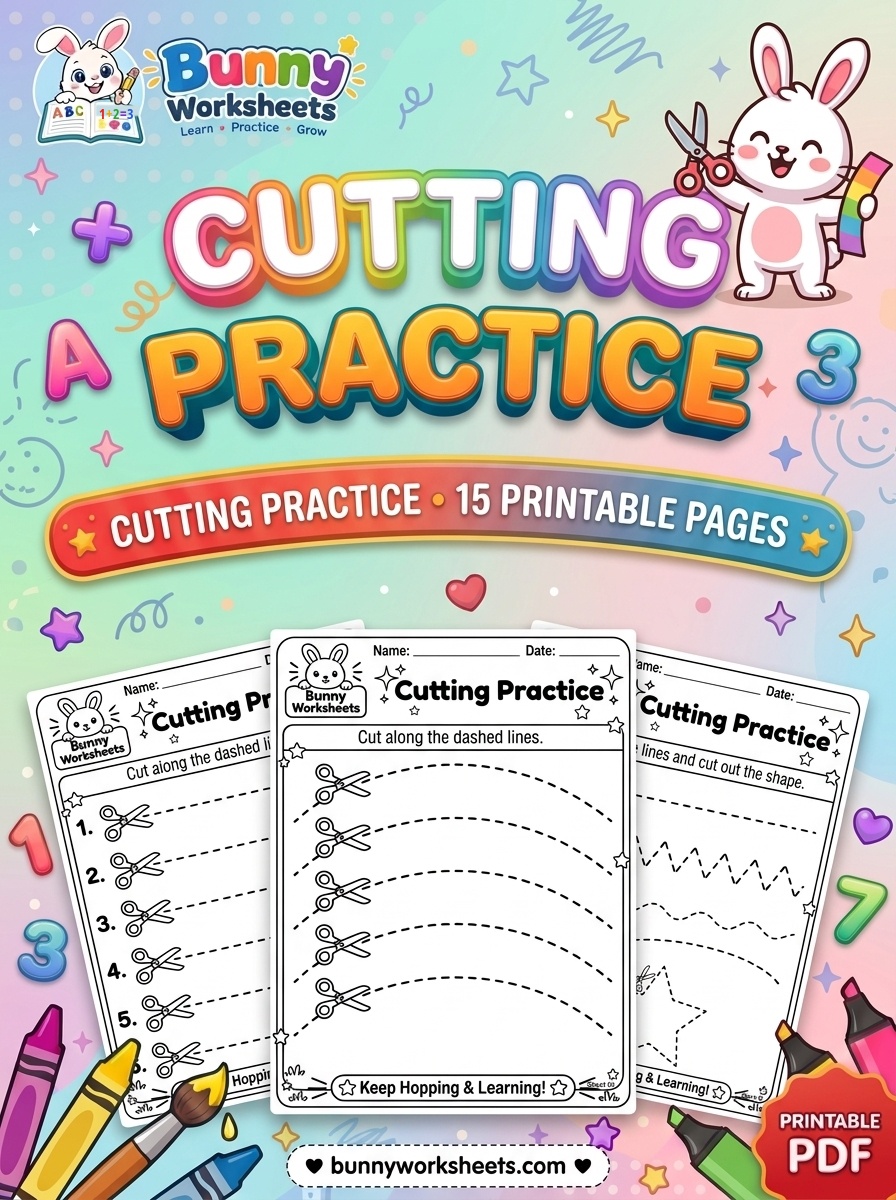
Cutting with scissors is one of the first fine-motor skills young children learn, and these free printable cutting practice worksheets turn it into a game. Each of the 15 sheets gives children a dashed line to follow, from straight lines for first snips to zigzags, waves, curves and spirals, then shapes and pictures to cut out.
Every page is a black and white PDF with one clear cutting activity, from simple straight lines for beginners to a winding bunny-to-carrot path and a mixed review for confident cutters, so one page is a complete short activity for preschool and kindergarten children, at home or in the classroom. Print the pages in any order and work through the lines one at a time.
What Is Inside the Cutting Practice Worksheets Bundle
The 15 sheets cover scissor practice from the very first snip to confident cutting, with straight, vertical and diagonal lines, zigzag and wavy lines, curved arches and spirals, shapes and pictures to cut out, and a winding path that helps the bunny reach the carrot, so children really practise controlling the scissors, not just snipping at random. The last sheet mixes every line type on one page, so children show what they can do from start to finish.
Cutting like this builds hand strength and hand-eye coordination, the fine-motor control children use for writing, drawing and colouring. It is part of our fine motor worksheets collection, where all the scissor, tracing and pencil-control sets live together, and it sits alongside our preschool worksheets collection and our kindergarten worksheets collection.
Cutting Practice: Straight Horizontal Lines
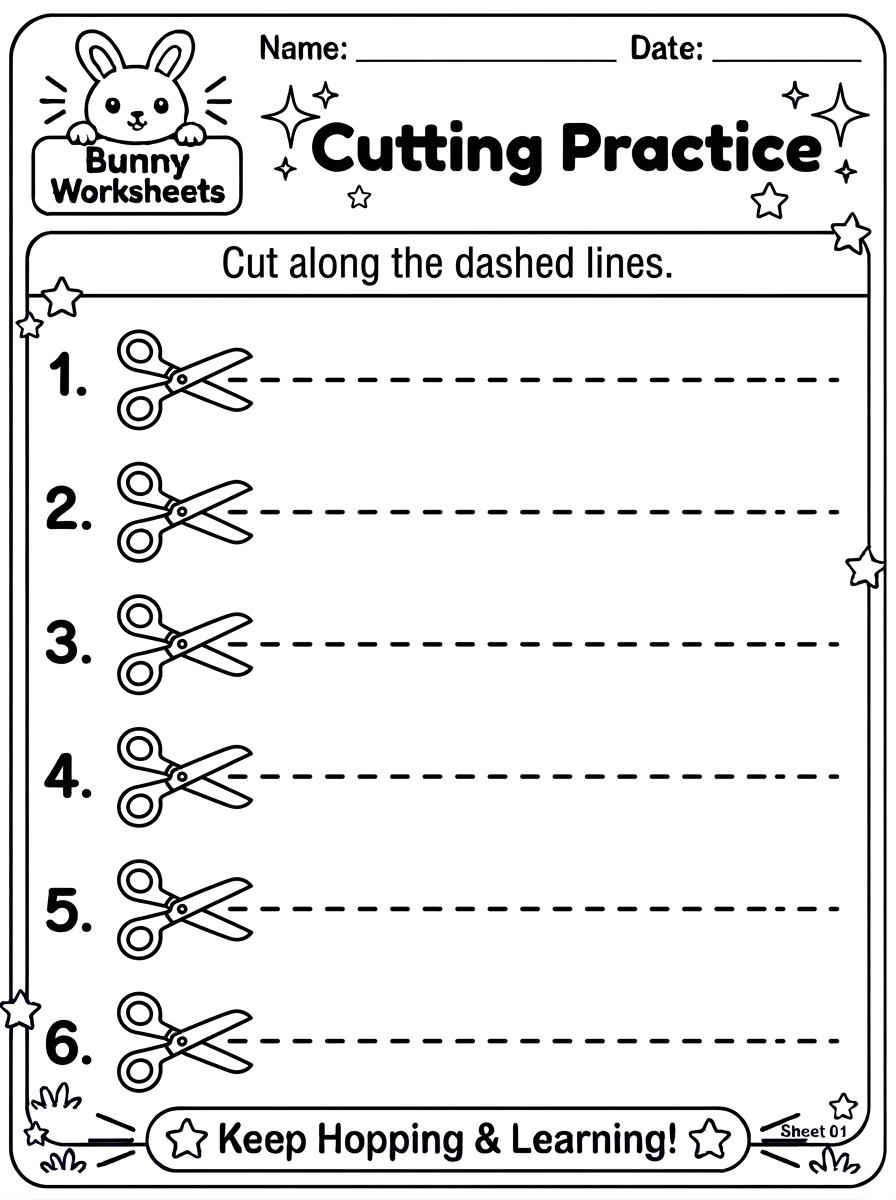
Six numbered rows each start with a pair of scissors and run along a straight horizontal dashed line. It is the simplest sheet in the set, so it is the right place for a child’s very first snips.
Cutting Practice: Straight Horizontal Lines in Two Parts
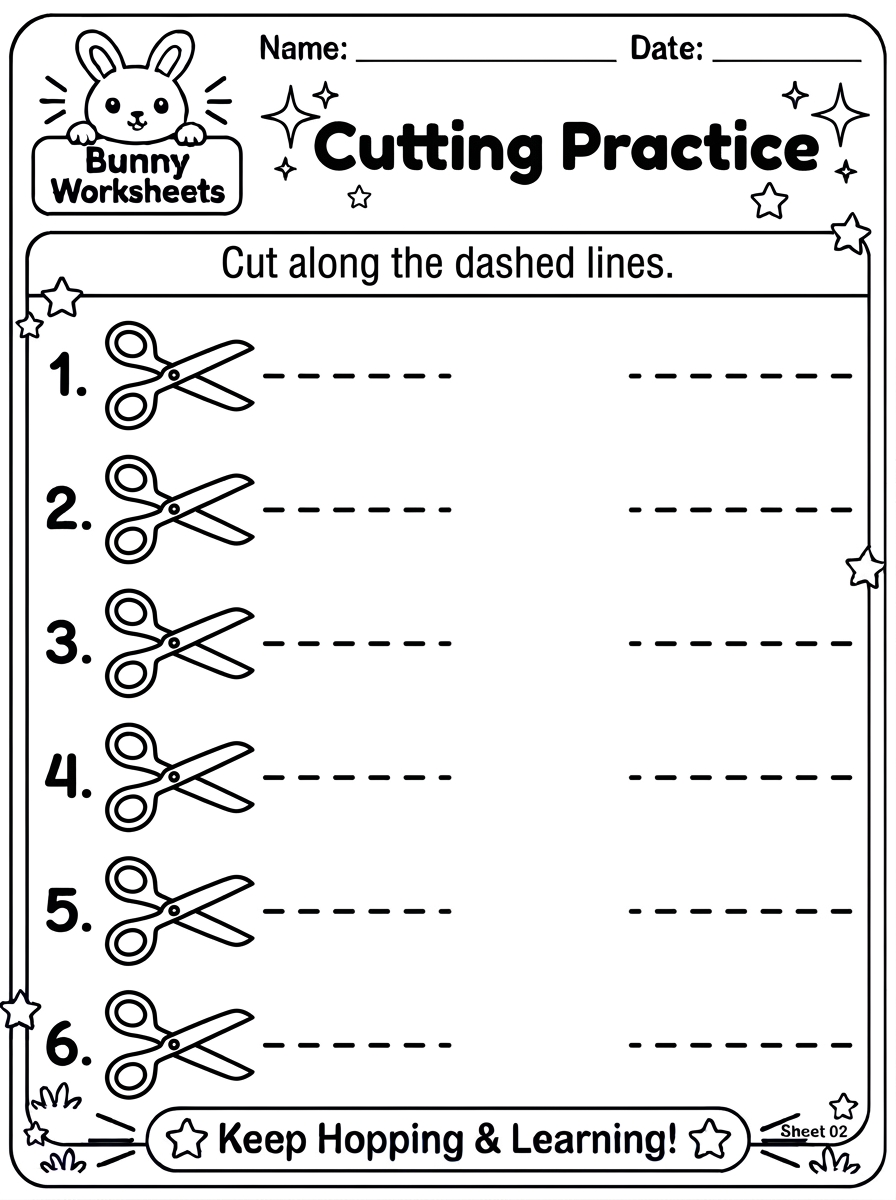
Six numbered rows each have a straight horizontal dashed line with a gap in the middle, so the child cuts, stops, and starts again. It builds on the first sheet by asking children to lift their scissors and begin a second cut on the same line.
Cutting Practice: Straight Vertical Lines
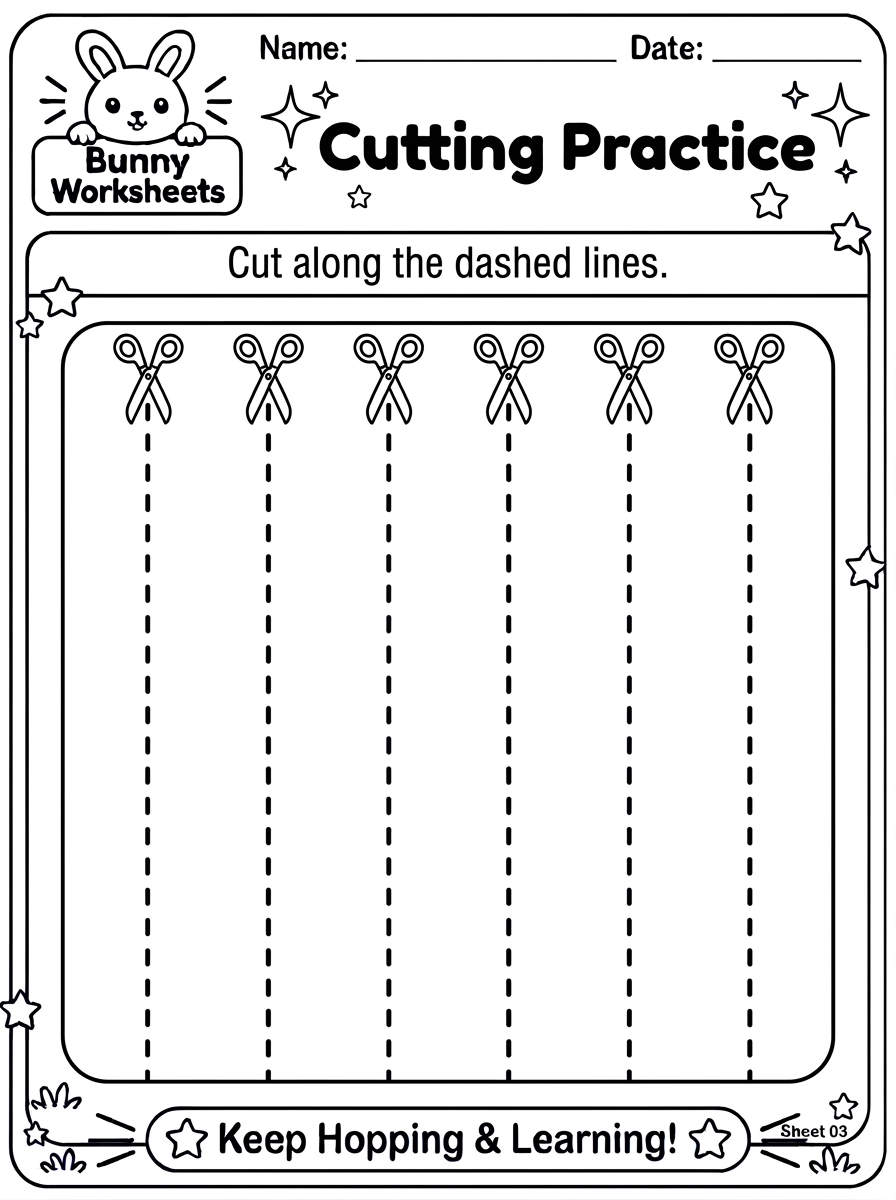
Six columns of straight vertical dashed lines run from top to bottom, each starting with a pair of scissors. Cutting downwards in a straight line gives children a new direction to control before they try sloping lines.
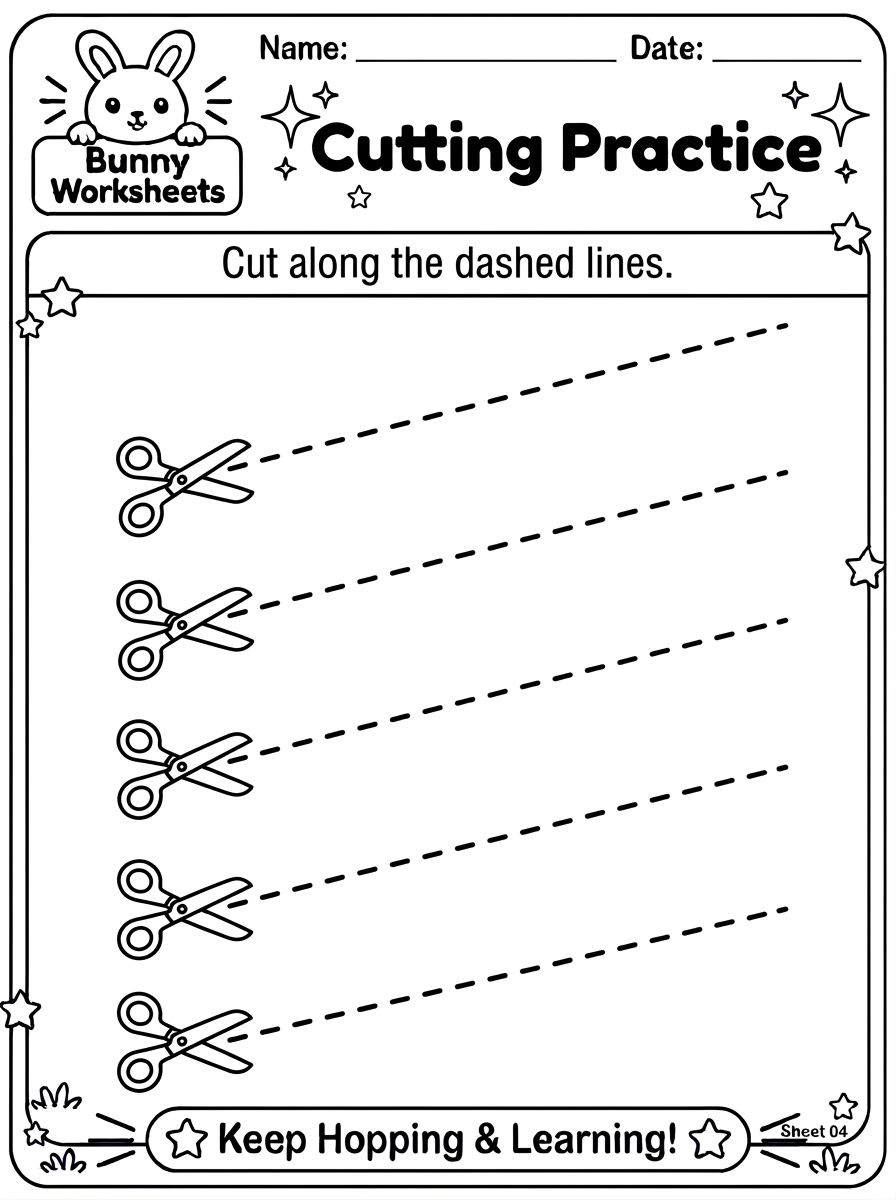
Cutting Practice: Diagonal Lines Sloping Up
Five numbered rows each start with a pair of scissors and follow a diagonal dashed line sloping up to the right. The slope asks children to steer their scissors steadily instead of cutting straight across the page.
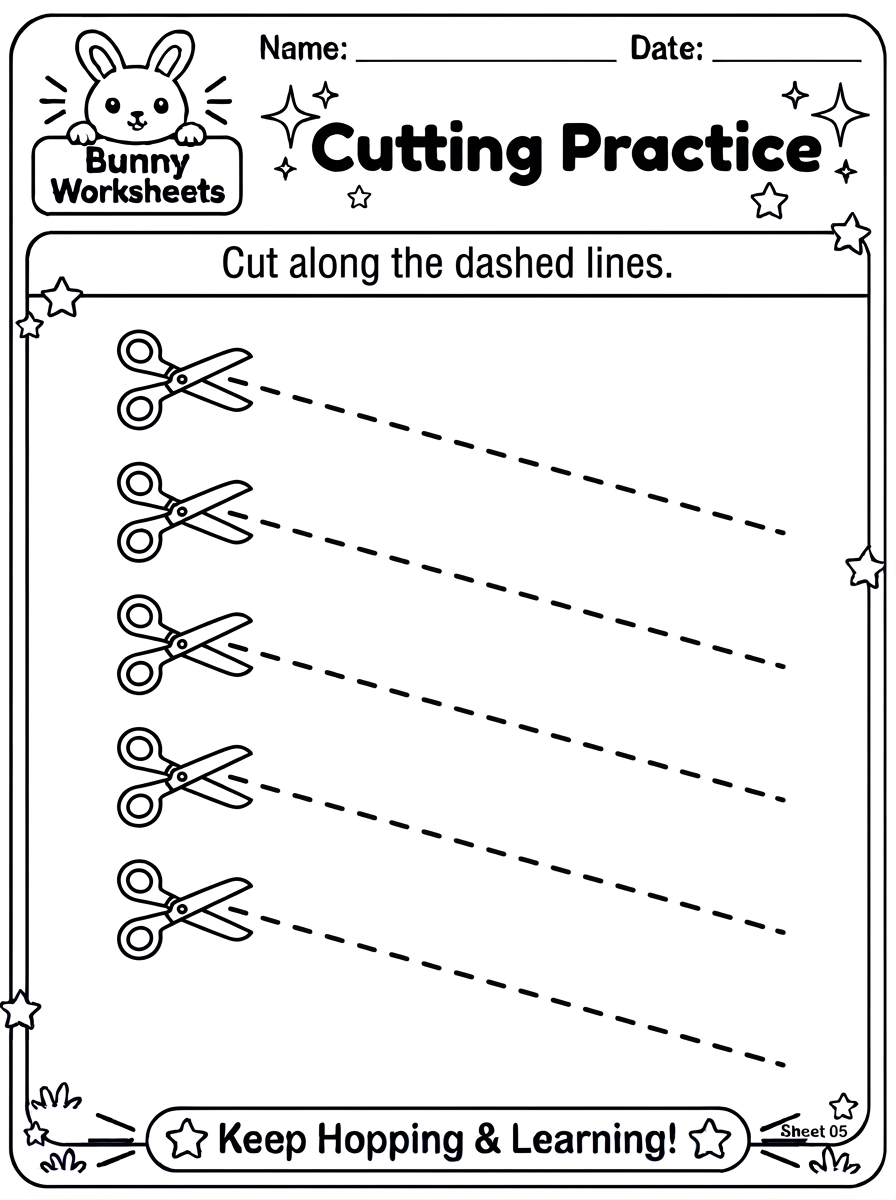
Cutting Practice: Diagonal Lines Sloping Down
Five numbered rows each start with a pair of scissors and follow a diagonal dashed line sloping down to the right. It pairs with the sloping-up sheet, so children practise the same steering in the opposite direction.
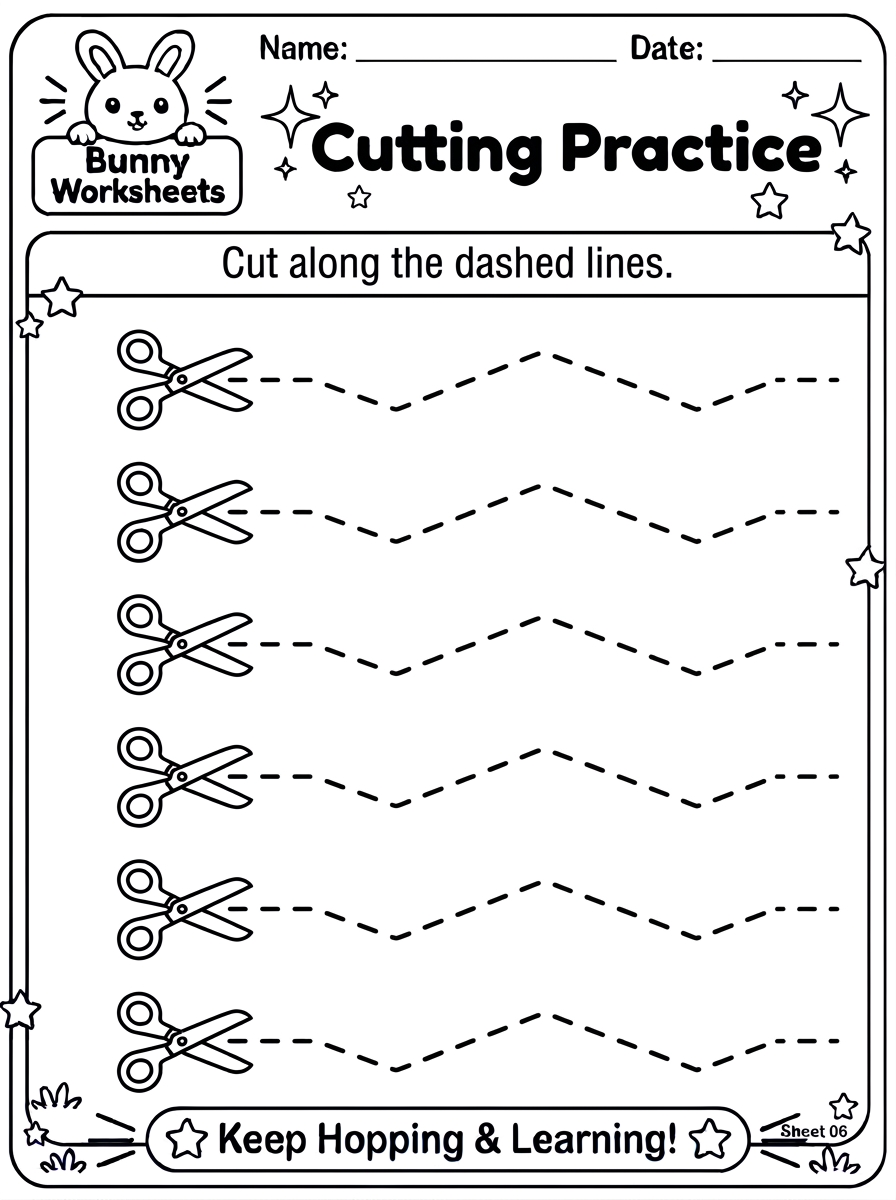
Cutting Practice: Zigzag Lines
Six numbered rows each start with a pair of scissors and follow a sharp zigzag dashed line across the page. The pointed turns ask children to stop, turn the paper, and start cutting in a new direction.
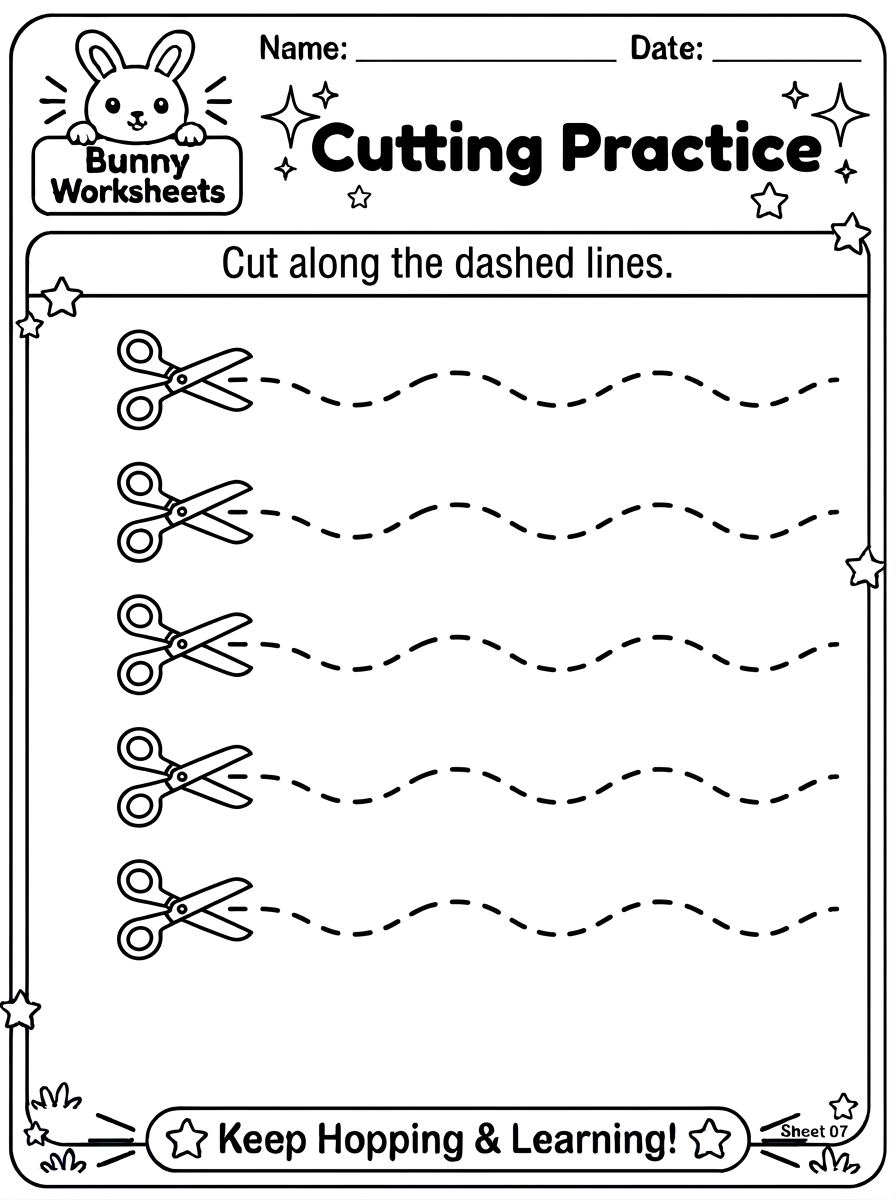
Cutting Practice: Wavy Lines
Five numbered rows each start with a pair of scissors and follow a smooth, rolling wavy dashed line. The gentle curves ask children to keep cutting steadily while the line rises and falls.
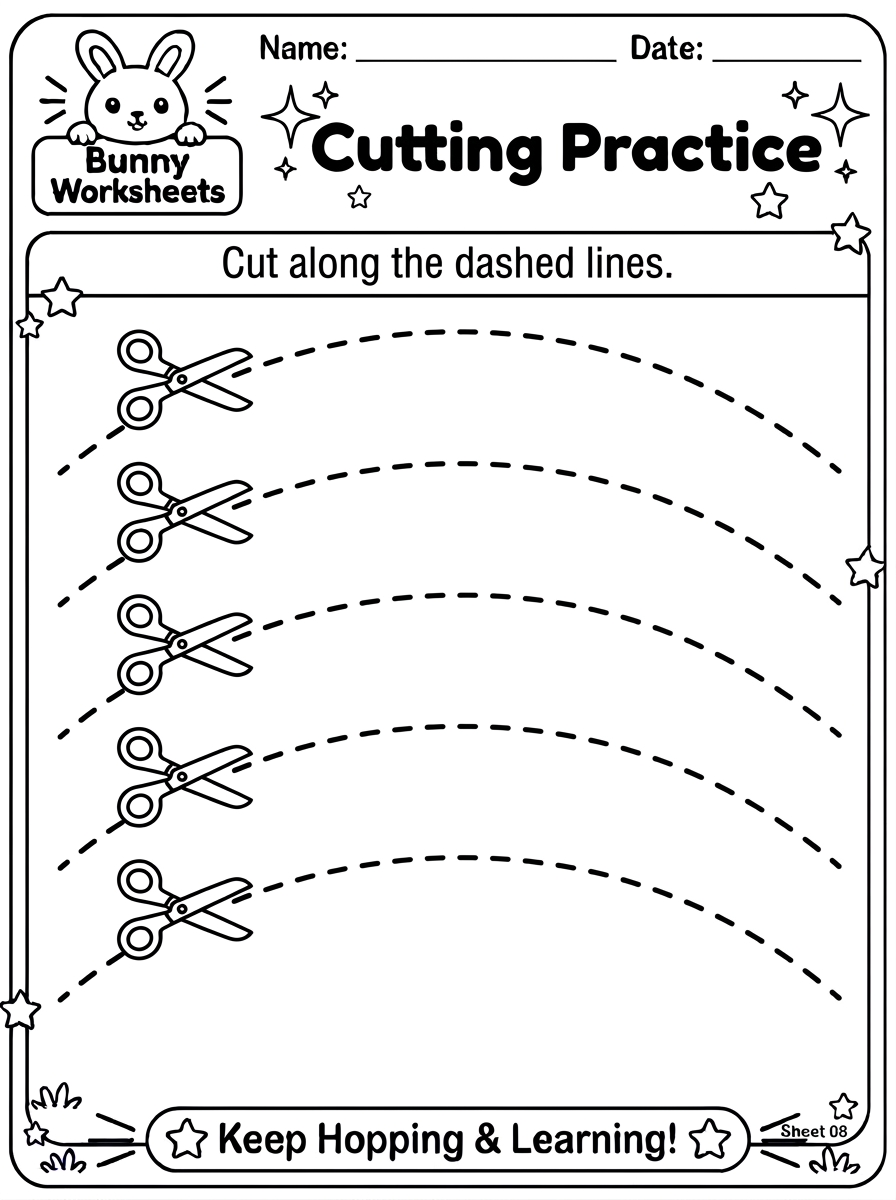
Cutting Practice: Curved Lines
Five numbered rows each start with a pair of scissors and follow a curved dashed line that arches across the page. It is a gentle step from wavy lines toward the spirals and shapes that follow.
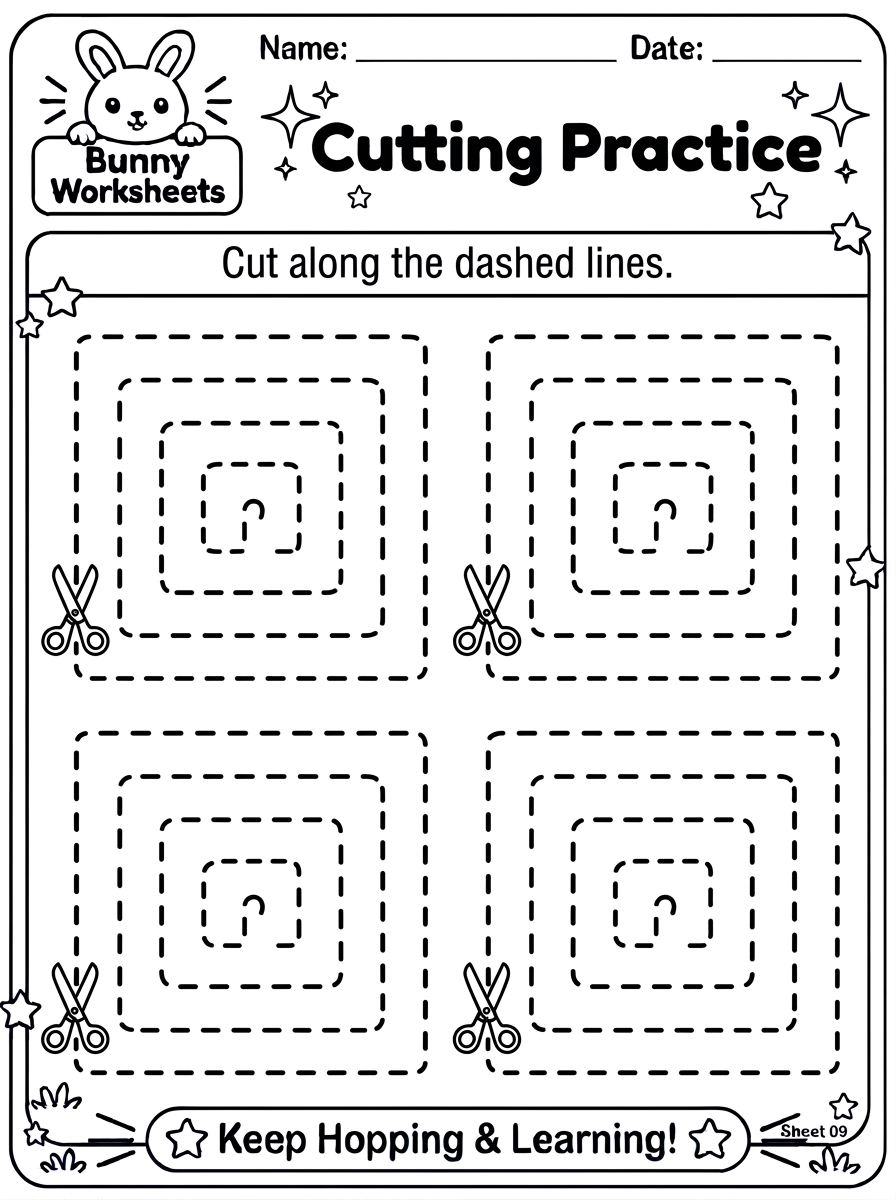
Cutting Practice: Spiral Mazes
Four square spirals sit in a two-by-two grid, each one a single dashed line winding from the outside in. Children must keep cutting and turning without lifting their scissors, which is the longest continuous cut in the set so far.
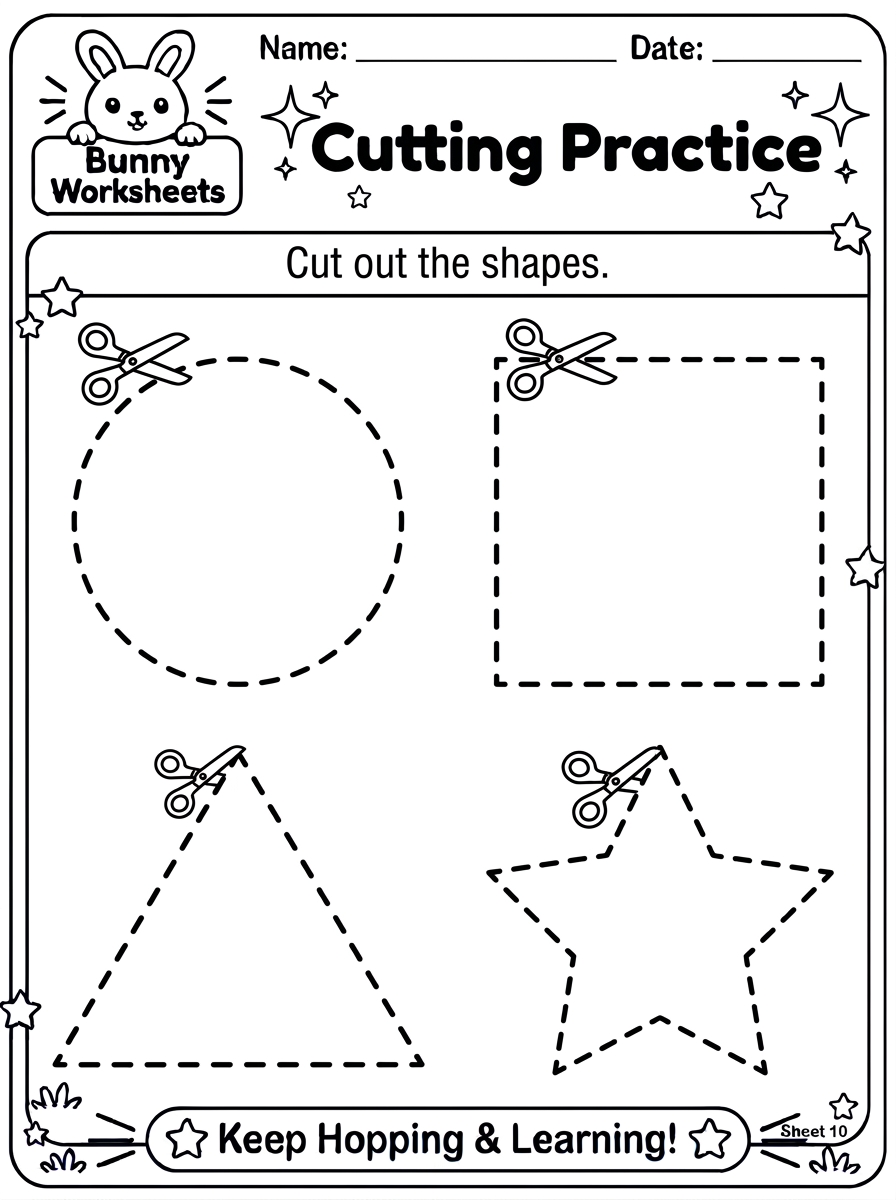
Cutting Practice: Cut Out the Shapes, Circle, Square, Triangle and Star
Four dashed outlines — a circle, a square, a triangle and a star — wait to be cut out and kept. Cutting around a whole shape asks children to turn the paper as they go, instead of cutting in one straight direction.
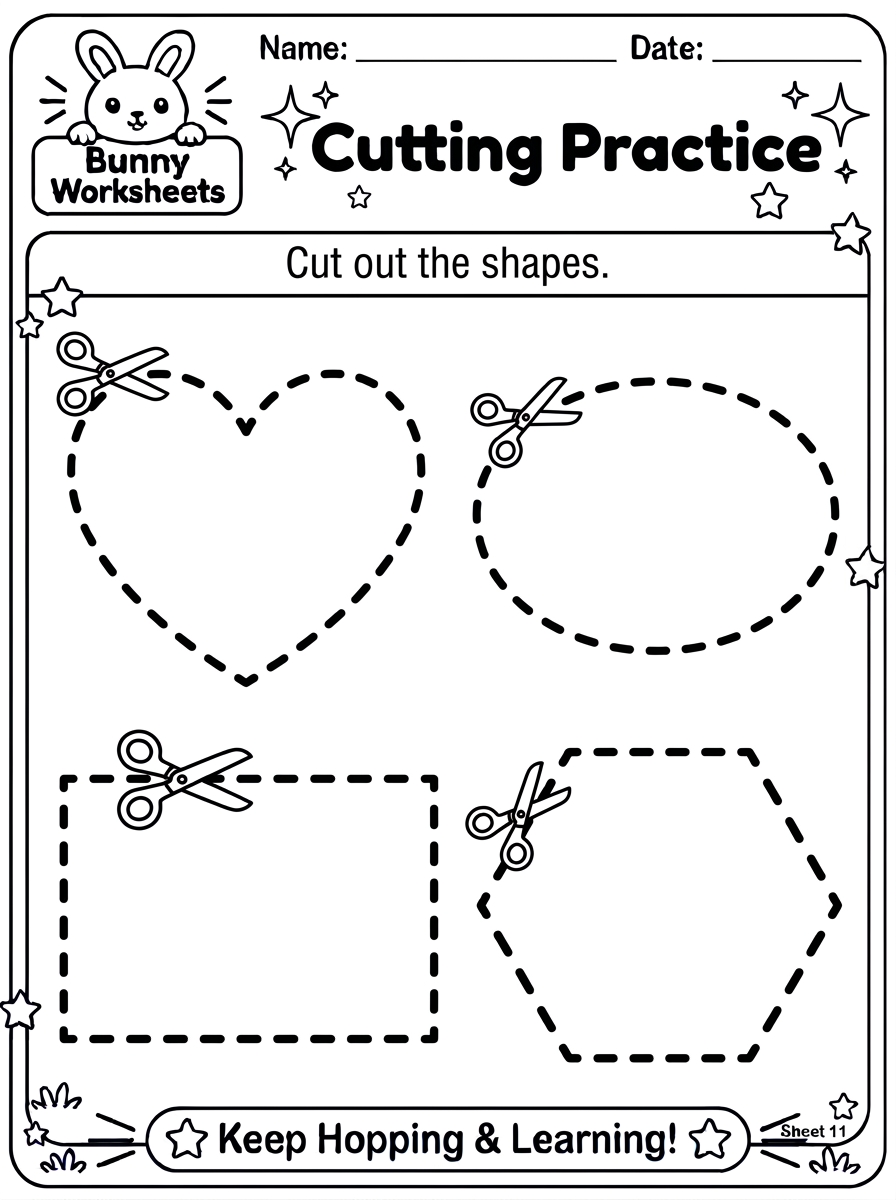
Cutting Practice: Cut Out the Shapes, Heart, Oval, Rectangle and Hexagon
Four more dashed outlines — a heart, an oval, a rectangle and a hexagon — wait to be cut out and kept. The heart’s curves and the hexagon’s six sides give children a harder set of turns to practise than the first shape sheet.
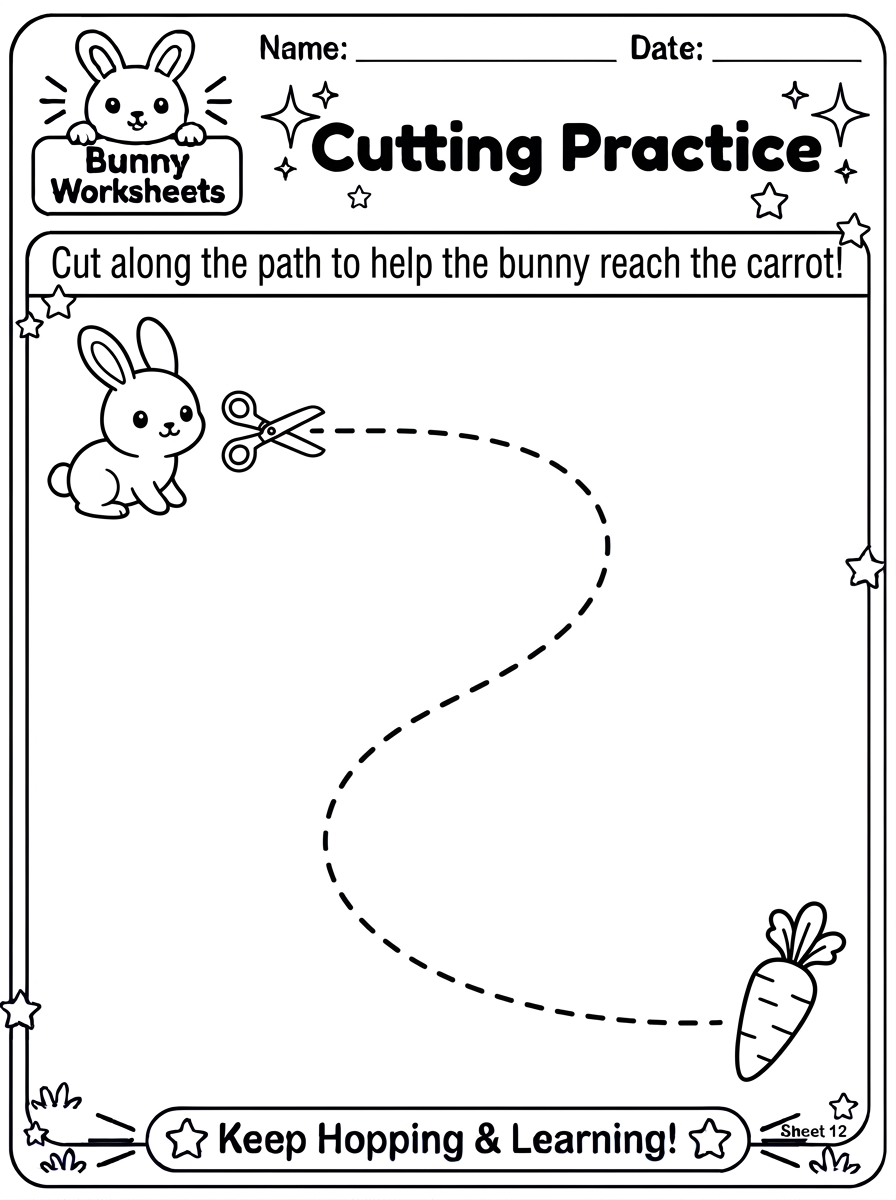
Cutting Practice: Cut Along the Path to Help the Bunny Reach the Carrot
One winding dashed path runs from a bunny at the top of the page to a carrot at the bottom. Following the bends without straying off the line turns cutting practice into a little game with a clear goal.
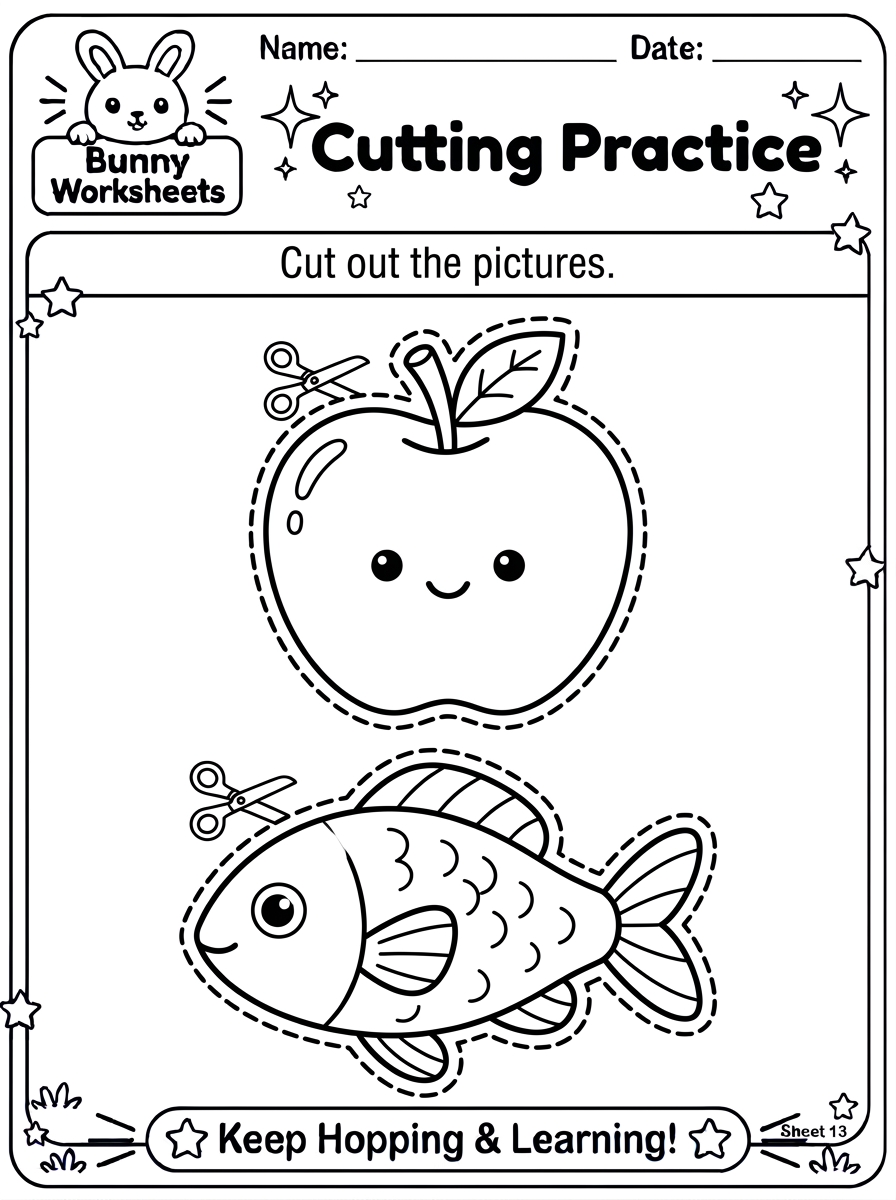
Cutting Practice: Cut Out the Pictures, a Smiling Apple and a Fish
Two dashed outlines — a smiling apple with a leaf and a fish with fins and a tail — wait to be cut out. Children cut around friendly pictures instead of plain shapes, so the finished cut-outs are ready to play with or stick down.
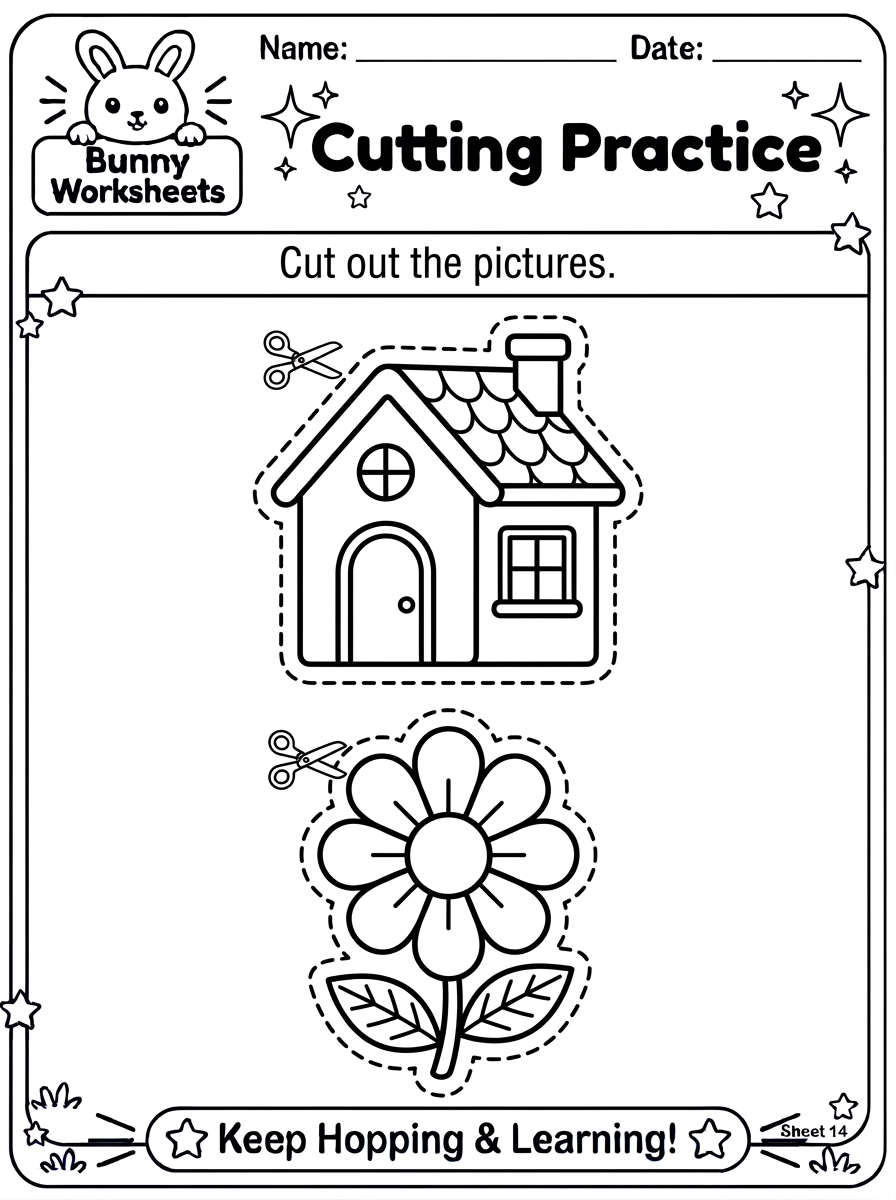
Cutting Practice: Cut Out the Pictures, a House and a Flower
Two dashed outlines — a house with a chimney, a round window and a door, and a flower with eight petals, a stem and two leaves — wait to be cut out. The house’s straight edges and the flower’s rounded petals ask children to switch between straight and curved cutting on one page.
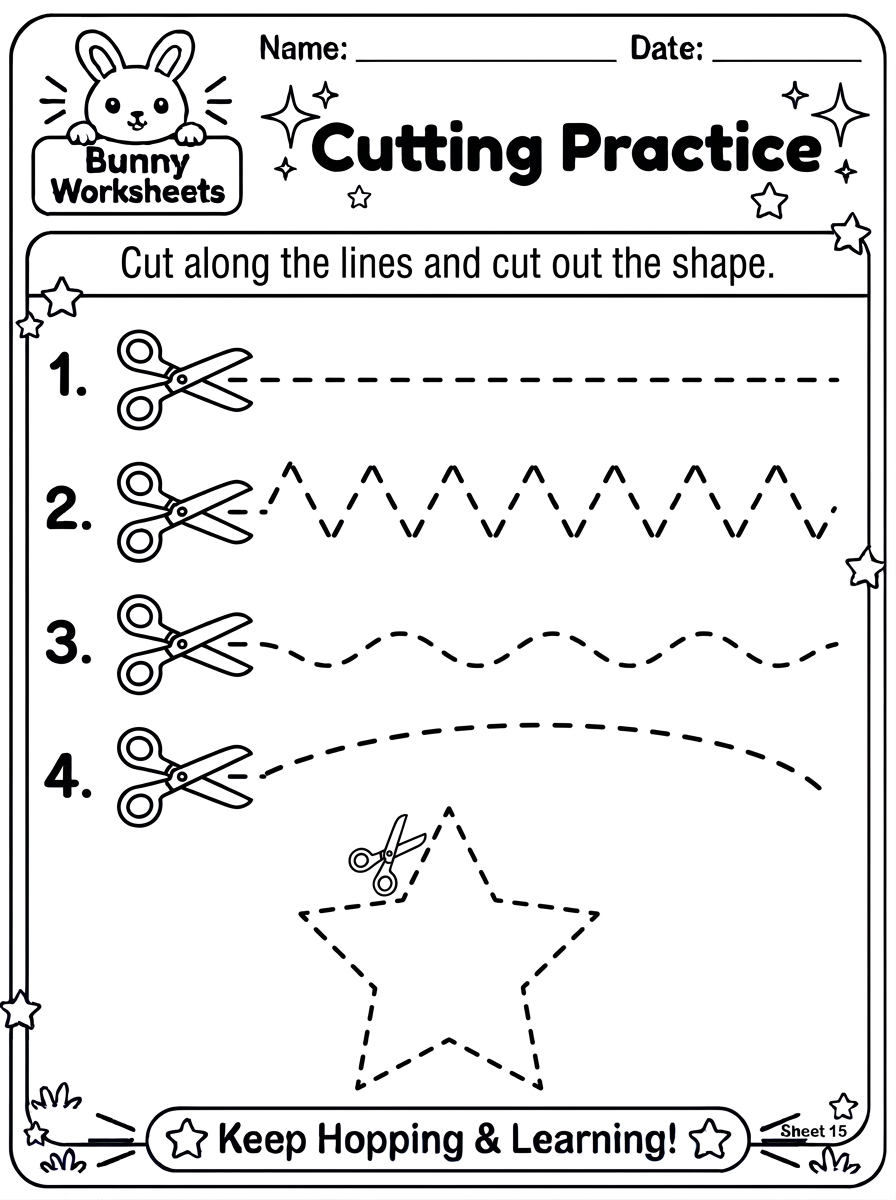
Cutting Practice: Mixed Review, Straight, Zigzag, Wavy and Curved Lines and a Star
Four numbered rows mix a straight line, a zigzag line, a wavy line and a curved line, with a large dashed star to cut out below them. It brings every line type in the bundle onto one page, so children can show what they can do from start to finish.
Where to Go Next
Once cutting along straight lines feels easy, the next step is our Dot to Dot Worksheets, where children join the dots to finish a picture, and our Shadow Matching Worksheets, Color by Number Worksheets and Number Order Worksheets, where the same careful hand control is used in a different kind of game.
You can find every set in our fine motor worksheets collection.