
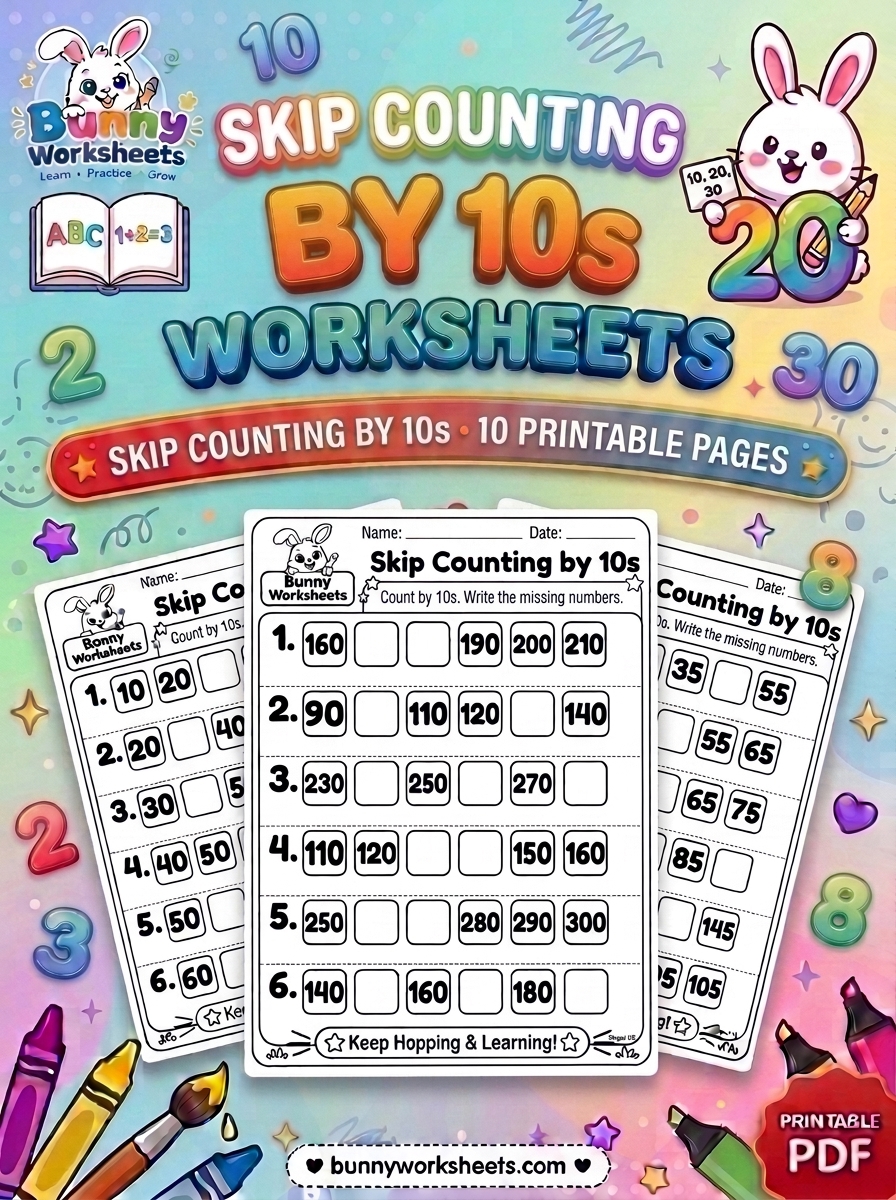
Counting by 10s is the first skip-counting pattern young children learn, and these free printable skip counting by 10s worksheets turn it into a fill-in-the-blank game. Each of the 10 sheets shows six rows of numbers with gaps, and children write the missing numbers, counting by 10s.
Every page is a black and white PDF with six short rows, from 10, 20, 30 up to the 400s and 500s, so one page is a complete short activity for kindergarten and first-grade children, at home or in the classroom. Most sheets count forward, one counts backwards and one starts from 5, so the set practises the pattern from every direction. Print the pages in any order and work through the rows one at a time.
What Is Inside the Skip Counting by 10s Worksheets Bundle
The 10 sheets cover counting by 10s from 10 all the way to 500, with the numbers climbing higher as the set goes on. Each row gives six numbers in steps of 10 with two blanks, and children write the missing numbers in the empty boxes, which builds place value and counting in tens without any counting in ones.
Skip counting by 10s like this builds early maths thinking, the pattern children use for counting money, telling time and adding in tens with confidence. It is part of our kindergarten worksheets collection and our first grade worksheets collection, where all the sets for kindergarten and first-grade children live together.
Skip Counting by 10s: Forward Counting, 10 to 110
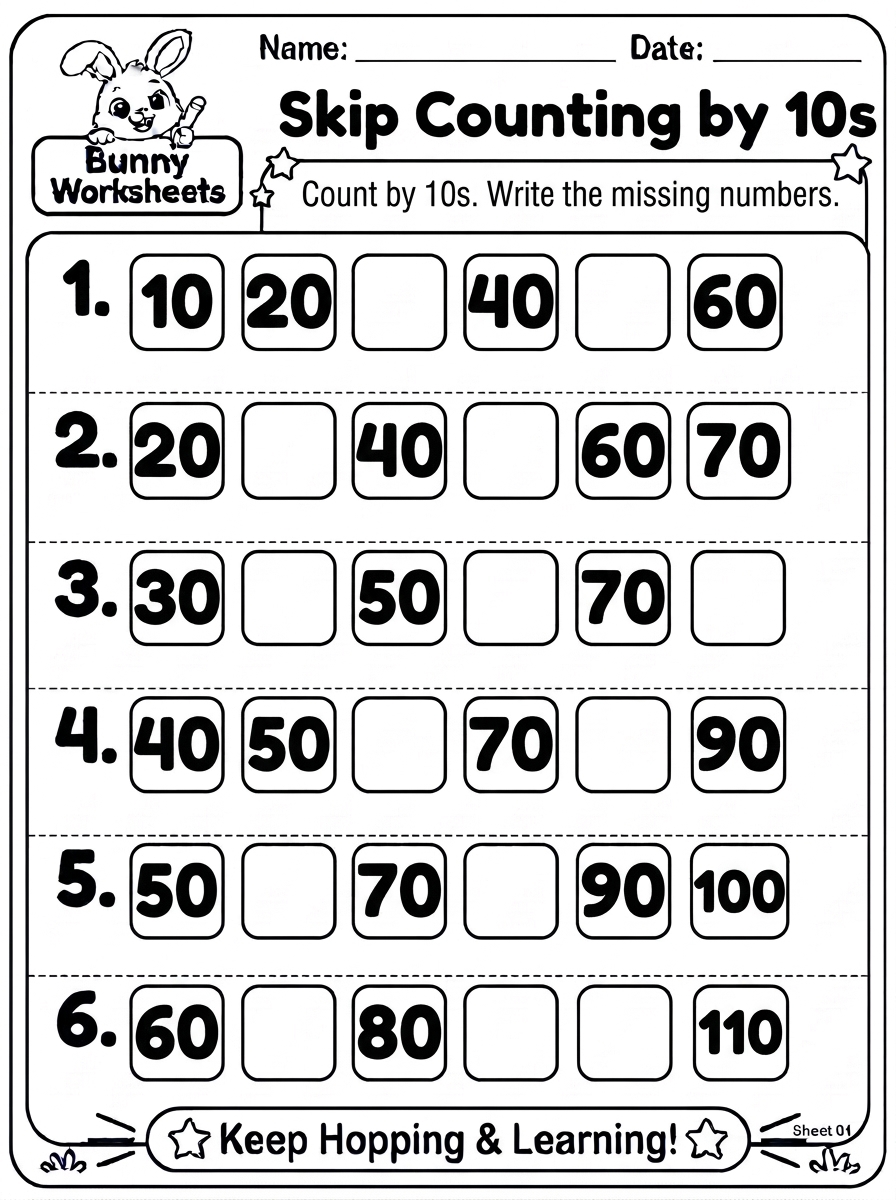
Six rows count forward by 10s from 10 to 110, beginning with 10, 20, 30 and 40, 50, 60. Children write the missing numbers in the empty boxes, which helps them spot the tens pattern and count in tens without counting in ones.
Skip Counting by 10s: Forward Counting, 10 to 160
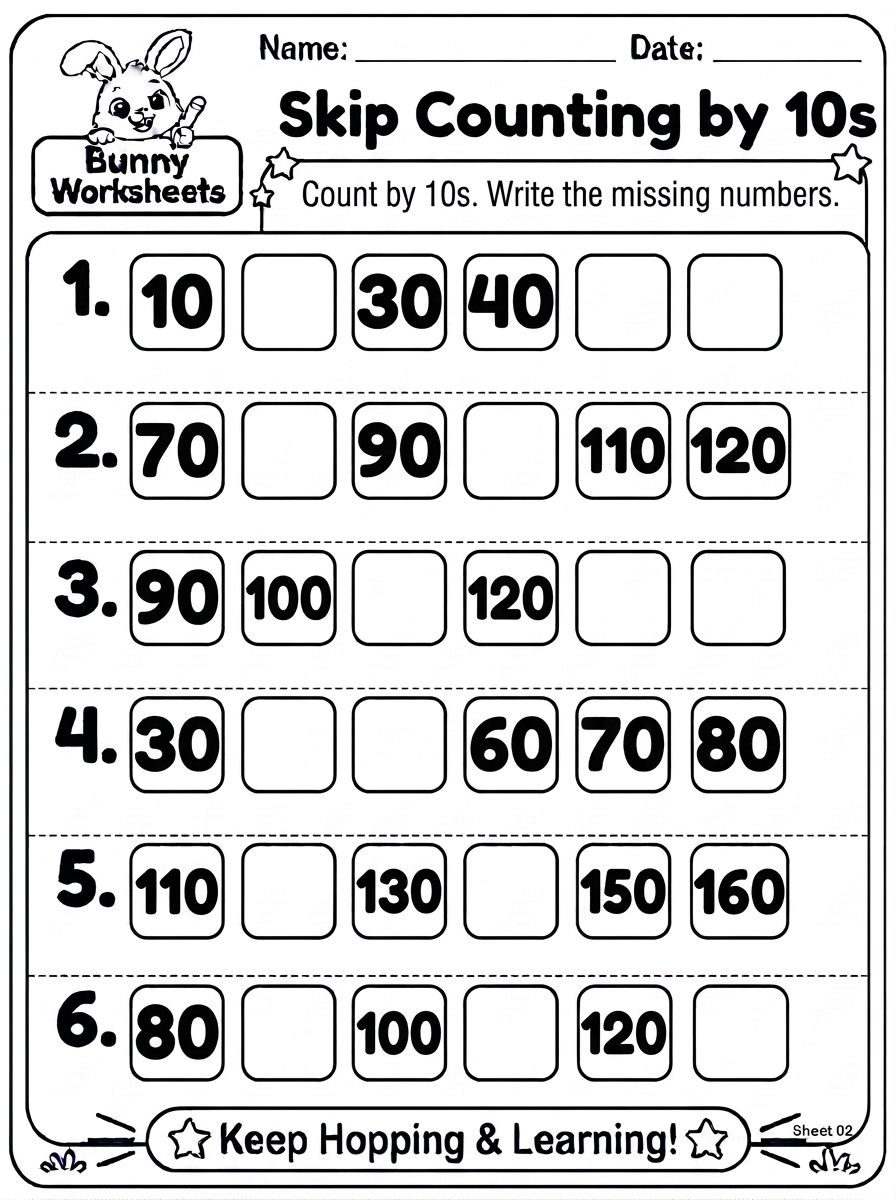
Six rows count forward by 10s from 10 to 160, including rows that start at 10, 70 and 90 and one that runs from 110 to 160. Children write the missing numbers in the empty boxes, so they practise jumping in tens from different starting points.
Skip Counting by 10s: Forward Counting, 50 to 220
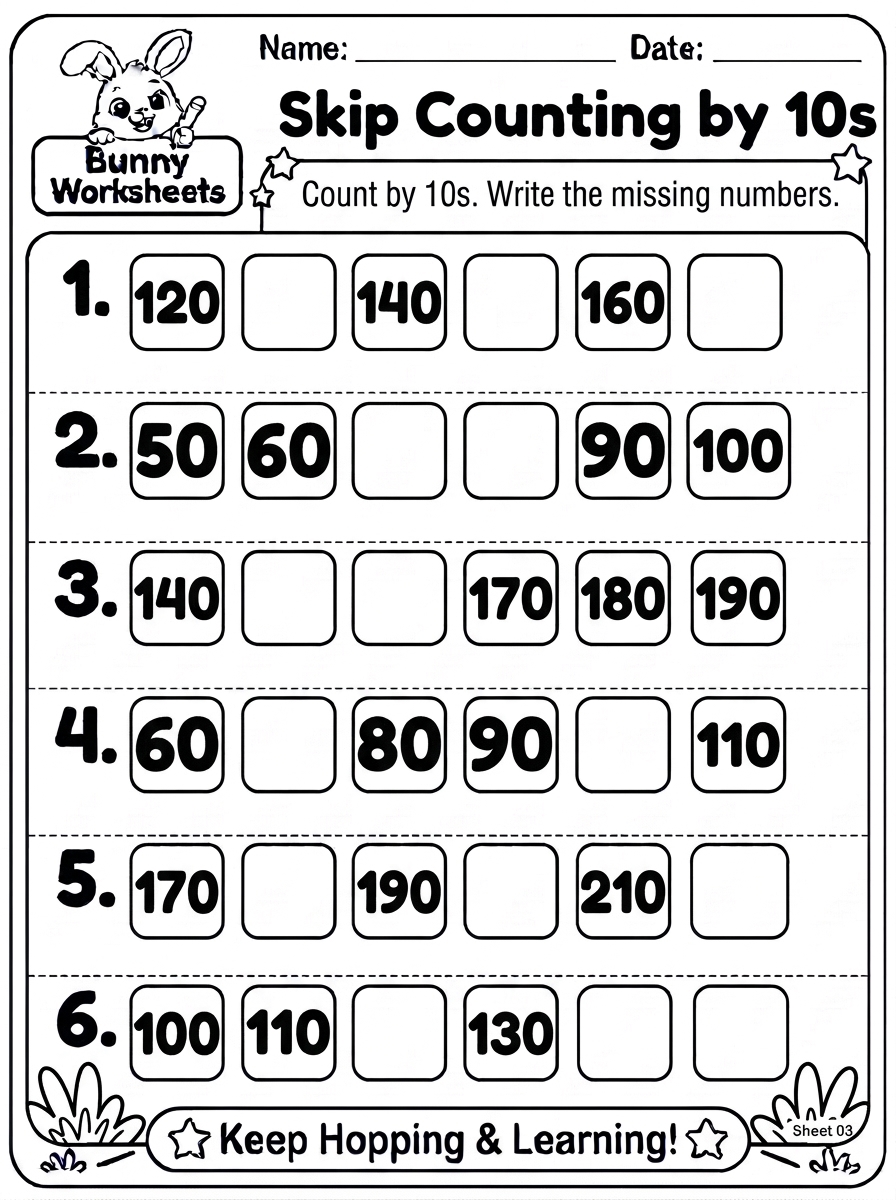
Six rows count forward by 10s from 50 to 220, with rows starting at 50, 60, 100, 120, 140 and 170. Children write the missing numbers in the empty boxes, building confidence with three-digit numbers that still follow the same tens pattern.
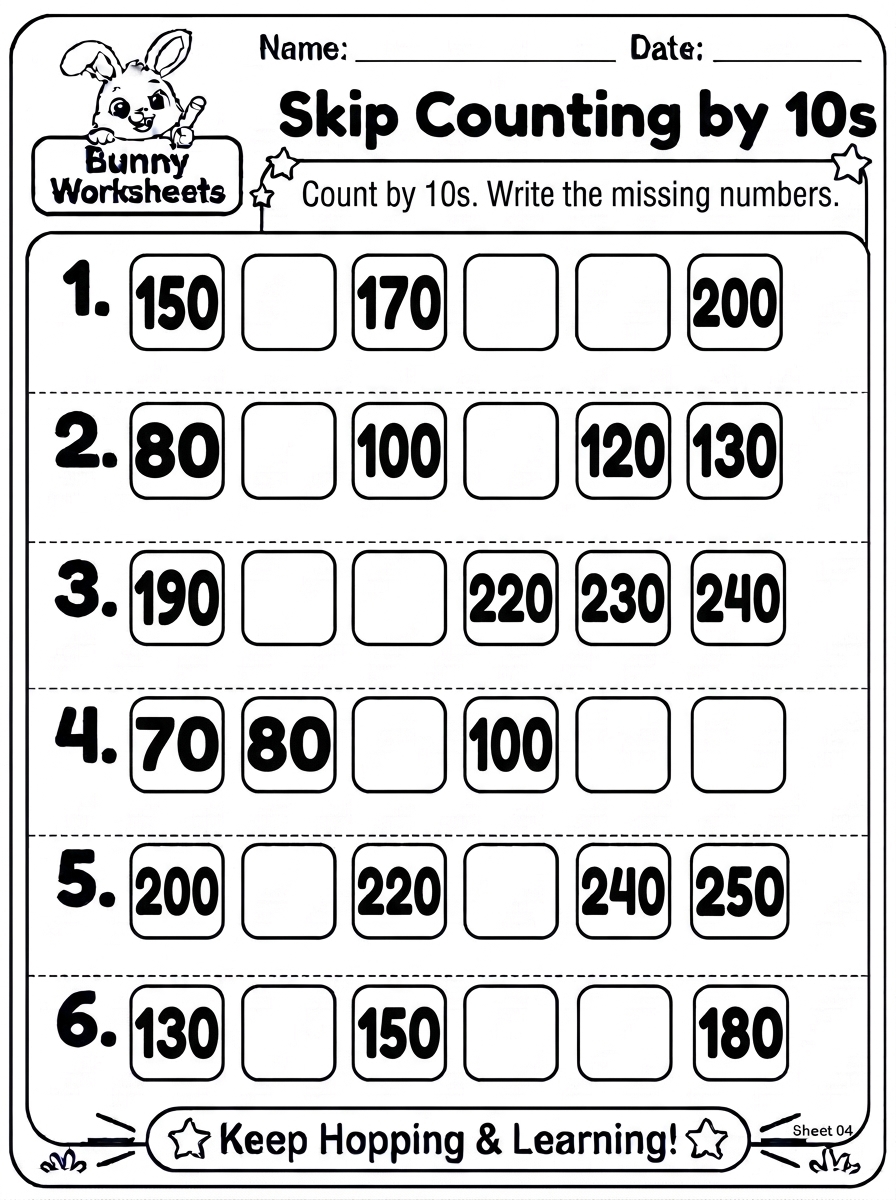
Skip Counting by 10s: Forward Counting, 70 to 250
Six rows count forward by 10s from 70 to 250, with rows starting at 70, 80, 130, 150, 190 and 200. Children write the missing numbers in the empty boxes, so they practise counting in tens through the 100s and into the 200s.
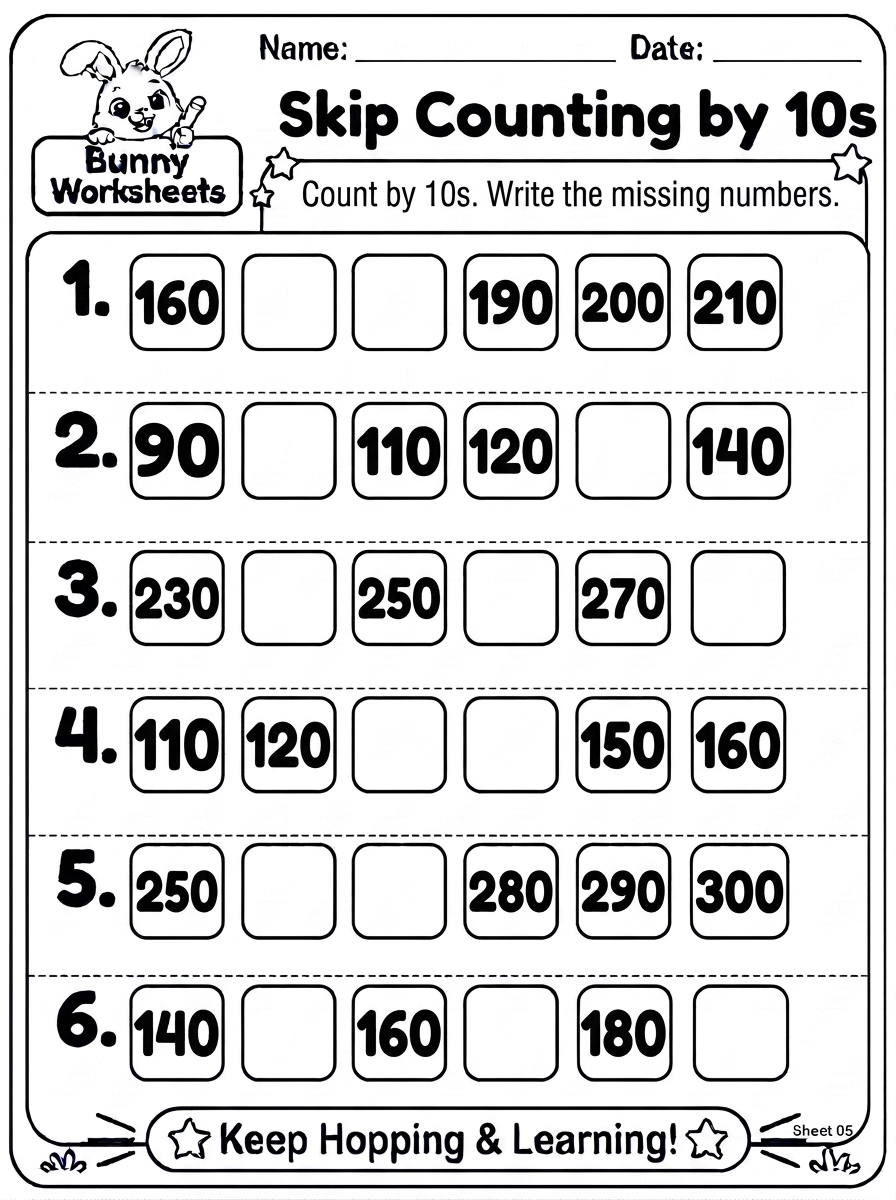
Skip Counting by 10s: Forward Counting, 90 to 300
Six rows count forward by 10s from 90 to 300, with rows starting at 90, 110, 140, 160, 230 and 250. Children write the missing numbers in the empty boxes, which strengthens place value as the numbers cross into the 200s and reach 300.
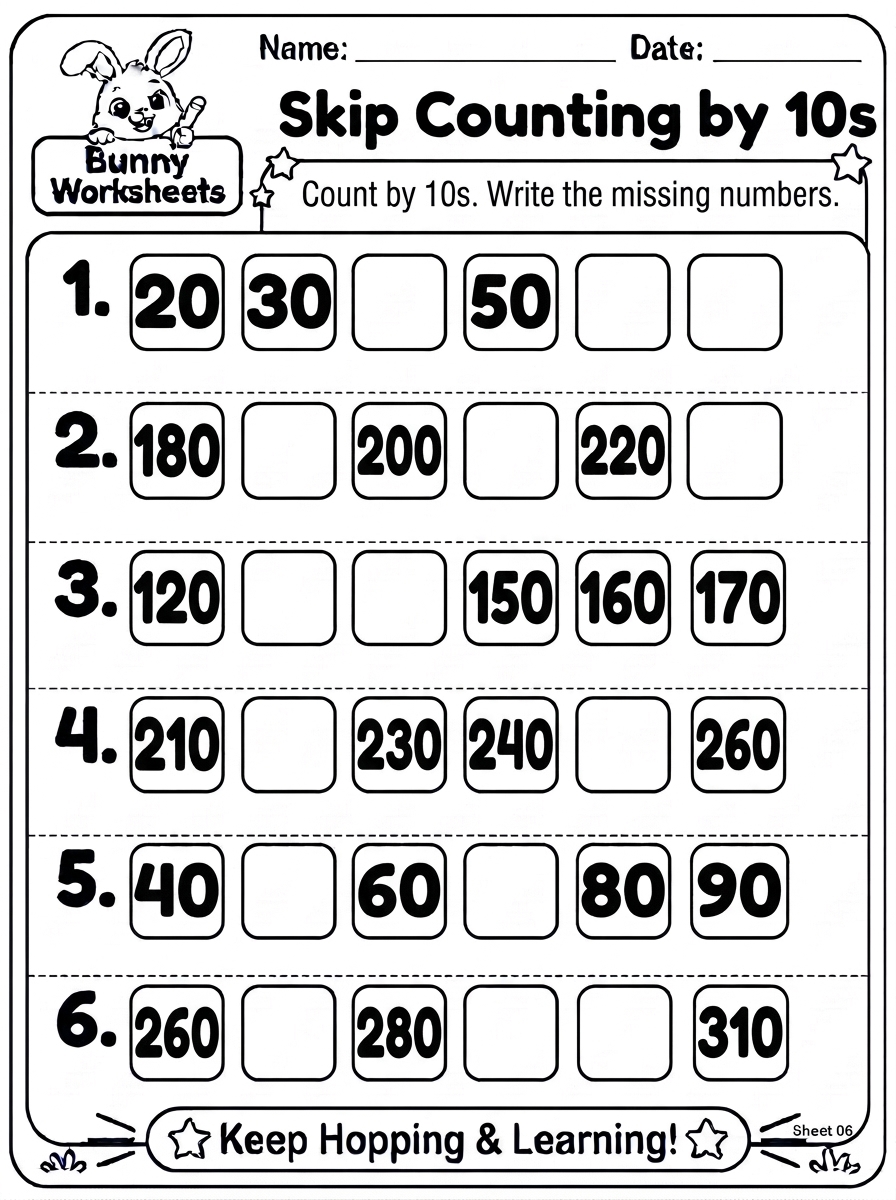
Skip Counting by 10s: Forward Counting, 20 to 310
Six rows count forward by 10s from 20 to 310, with rows starting at 20, 40, 120, 180, 210 and 260. Children write the missing numbers in the empty boxes, so they practise the tens pattern across a wide range of starting numbers.
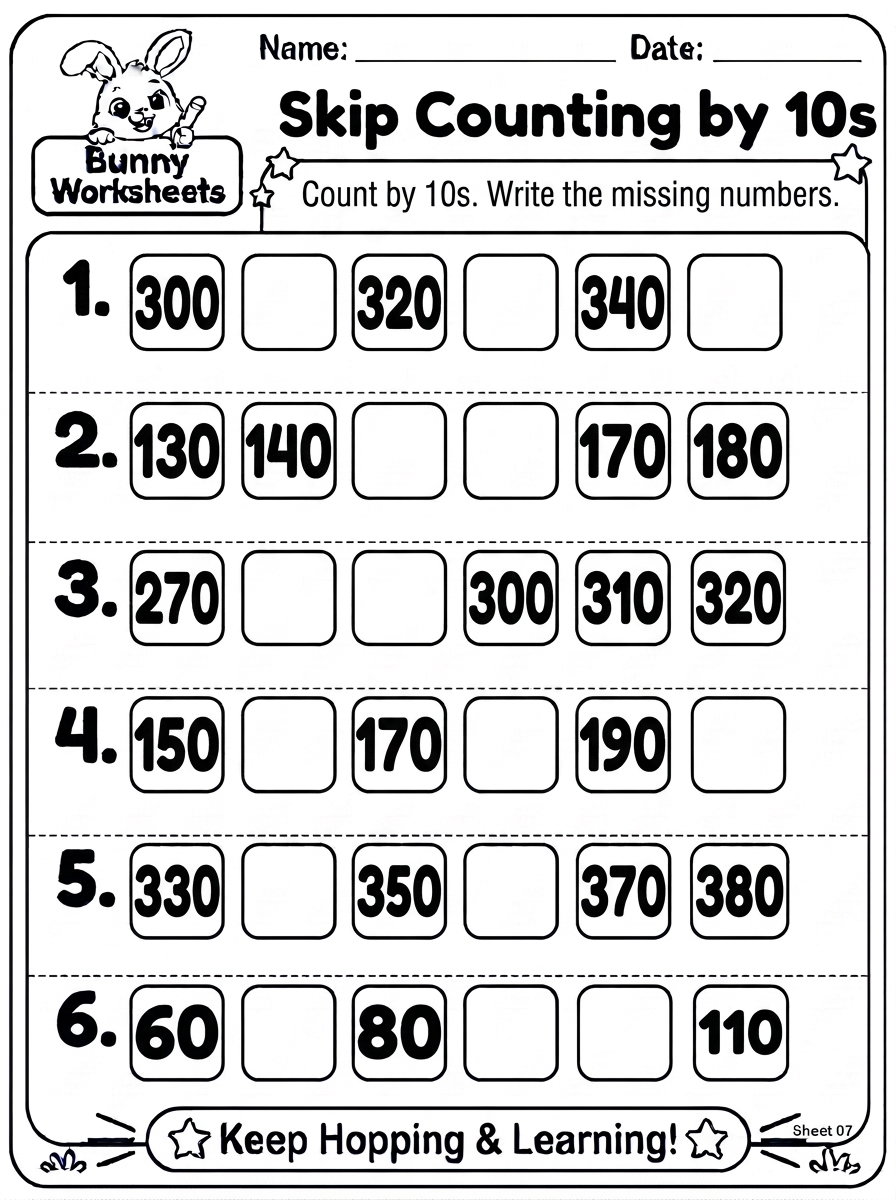
Skip Counting by 10s: Forward Counting, 60 to 380
Six rows count forward by 10s from 60 to 380, with rows starting at 60, 130, 150, 270, 300 and 330. Children write the missing numbers in the empty boxes, building fluency with larger numbers up to the high 300s.
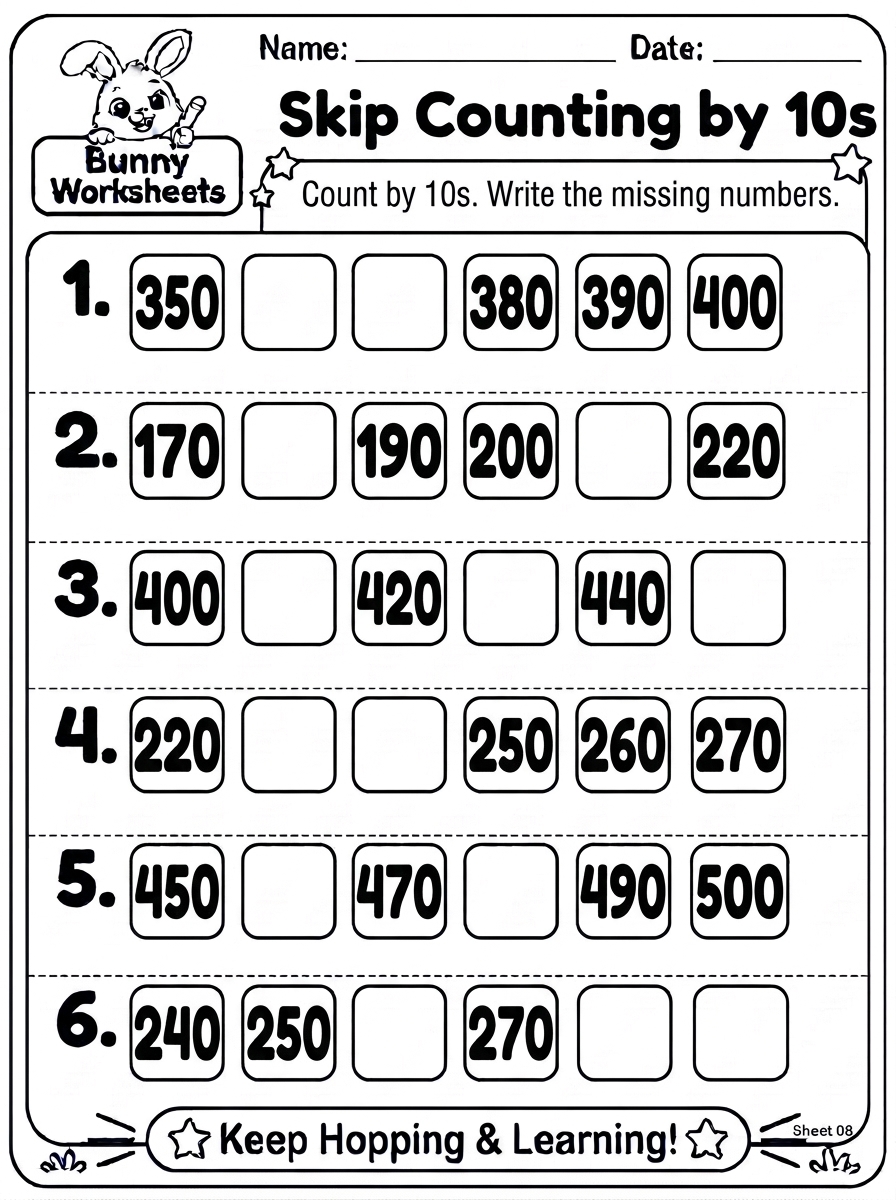
Skip Counting by 10s: Forward Counting, 170 to 500
Six rows count forward by 10s from 170 to 500, with rows starting at 170, 220, 240, 350, 400 and 450. Children write the missing numbers in the empty boxes, so they count in tens all the way to 500.
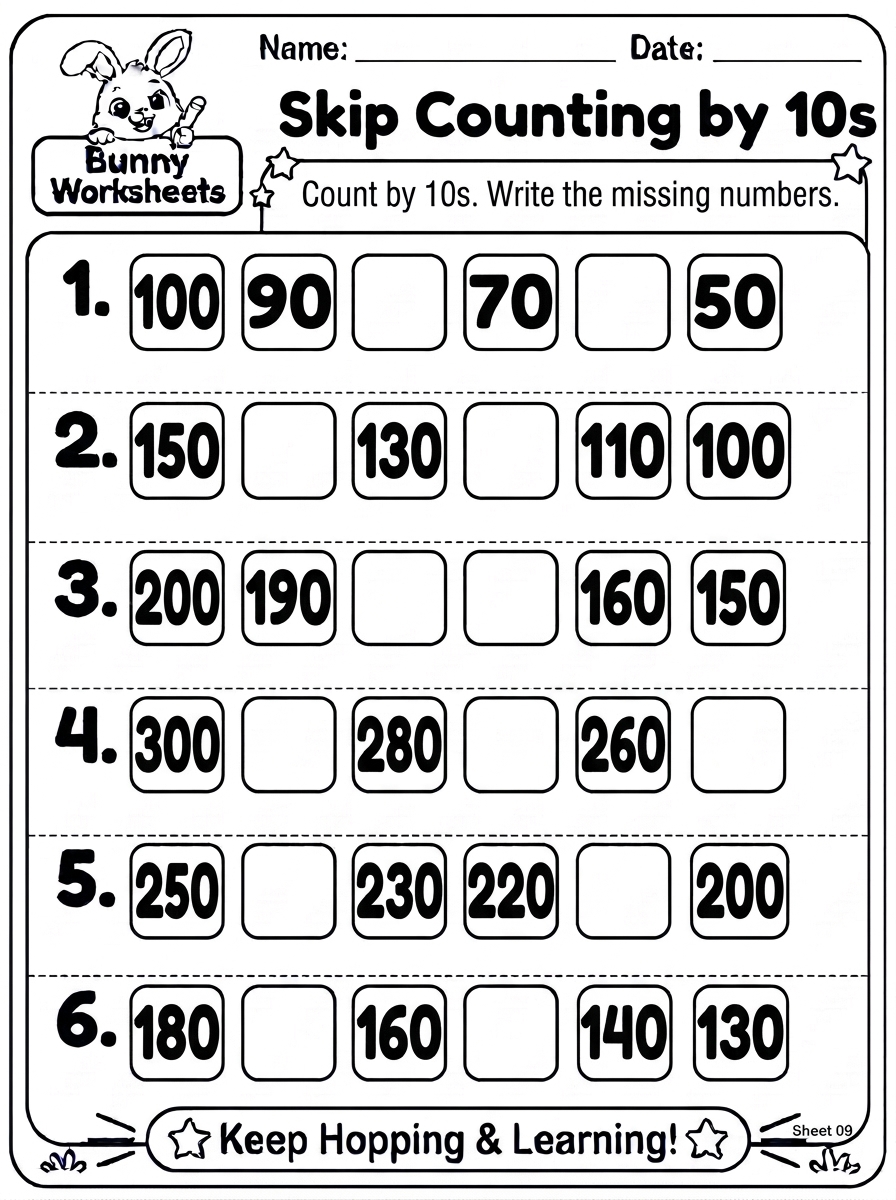
Skip Counting by 10s: Counting Backwards, 100 to 50 and 300 to 130
Six rows count backwards by 10s from 300 down to 50, including rows that start at 100, 150, 200, 250 and 300. Children write the missing numbers in the empty boxes, which turns the familiar tens pattern around and checks that they really know the order.
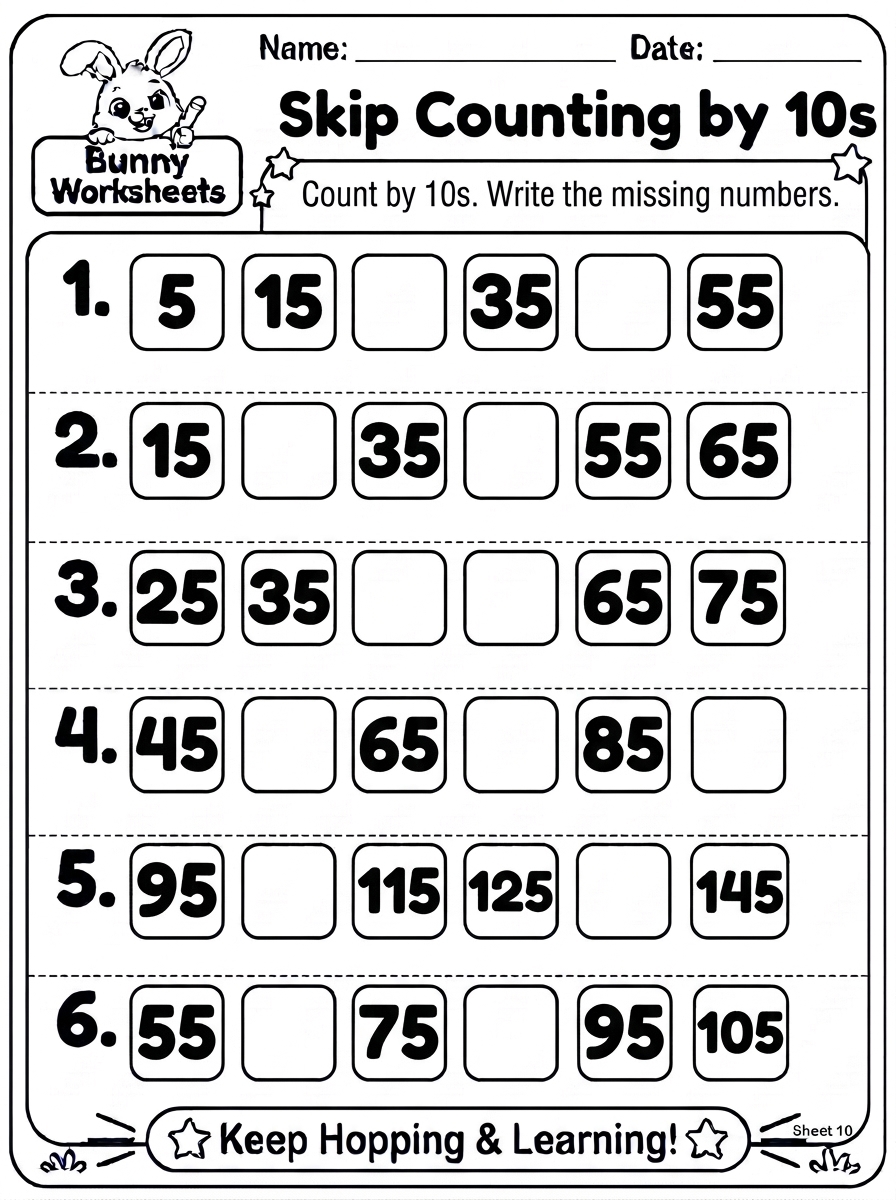
Skip Counting by 10s: Starting from 5, 5 to 145
Six rows count by 10s starting from 5, running from 5 to 145 with numbers ending in 5, such as 5, 15, 25, 45, 55 and 95. Children write the missing numbers in the empty boxes, so they learn that skip counting by 10s works from any starting number, not only from 10.
Where to Go Next
Once counting by 10s feels easy, the next step is to try the same pattern with a different step. Our Skip Counting by 2s Worksheets, Skip Counting by 5s Worksheets, Skip Counting by 3s Worksheets and Number Pattern Worksheets keep the same fill-in-the-blanks format, so children can practise a new pattern without learning a new kind of page.
You can find every set in our math worksheets collection.